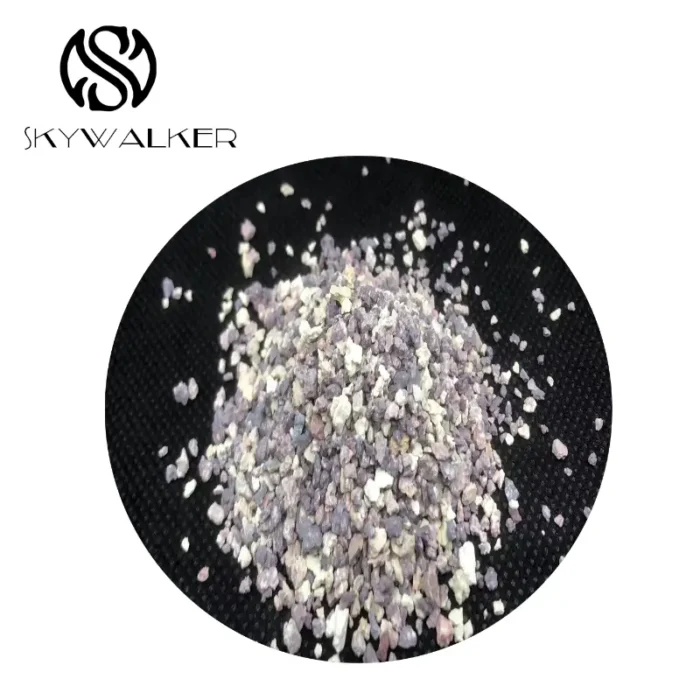
Electing industrial sorbents is vital for maximizing fabrication performance across a vast variety of sectors. This manual provides a detailed assessment of typical classes – including treated strainers, carbon hydrogels, and compounds – studying their novel features and appropriate adaptations. We'll explain major production processes, dealer pick considerations, and prevailing economy movements, ensuring you to conduct knowledgeable choices for your intended demands.
Mineral Adsorbents: Specifications, Employments & Leading Sellers
Earth substances are commonly utilized materials for absorbing pollutants from streams and airborne particles. Their effectiveness stems from their built-in open structure and area properties, offering a strong degree of adsorbed. Common forms include processed kaolinite, silicate gel, and engineered sieves.
- Functions include greywater cleaning, vapour purification, detoxification of lipids, and as enhancer in chemical processes.
Opting the Ideal Process Agent: A Creator's Consideration
Picking any best operational adsorbent involves paramount appraisal in terms of any company. Criteria entailing prescribed debris needing to be extracted, functional strain, heat level, together with rehabilitation method must are closely scrutinized. Additionally, perceiving the sorbent's gap width, coverage configuration, not to mention firm hardness provides unmatched productivity as well as enduring filter span. Professional staff representing [Your Company Name] extend dedicated assistance for help stakeholders perform desired supreme pick.
Finding Excellent Organic Filters: Critical Criteria for Industries
Selecting outstanding inorganic adsorbers is essential for optimizing functional effectiveness across several industries. Past simple coarse proportion, parameters such as cavity bulk, exterior extent, specific compactness, and stone makeup are decisive. Manufacturers must exhibit unwavering character through thorough checking and elaborate records. As well, weigh environmental strategies and fair securing to validate a long-term and honest stream.
Production Adsorbent Development: Propensities from Foremost Manufacturers
Dominant manufacturers of technical adsorbents are driving important advancement across multiple markets. A clear pattern involves development of organized materials, allowing for augmented sharpness and amount. On top of that, there's a increasing concentration on sustainable adsorbents, exploiting biodegradable sources and decreasing the global footprint. Distinct developments include engineered zeolites, functionalized carbons with innovative pore architectures, and hybrid frameworks displaying exceptional performance in liquid clarification and synthesis uses. In conclusion, virtual contrivance is assuming a key responsibility in enhancing sorbent innovation and perfecting.
Such Role of Mineral Materials in Manufacturing Productivity & Green Handling
Mineral materials fulfill a key responsibility in maximizing technical efficiency and solving ecological issues. Their power to actively trap unwanted substances from hydrous systems provides them important assets for runoff processing and surface rehabilitation. What’s more, the somewhat limited fee and vast accessibility of chosen soil sorbents increase to their applicability in several commercial settings and treatment initiatives.
Sourcing a Reputable Commercial Filter & Natural Adsorbent Manufacturer
Choosing a premium petrochemical adsorbents manufacturing adsorbent or natural adsorbent supplier requires detailed review. Initiate by exploring potential candidates, centering on their background in the absorptive industry.
- Analyze their licenses and observance to relevant measures.
- Solicit trials to analyze functionality in your unique application.
- Investigate about their supply practices – a responsible source will candidly share information.
Assessing Performance: Industrial vs. Organic Adsorbents
Production compounds and geological compounds commonly convey different potential traits. Customarily, engineered elements – such as treated elemental or microporous materials – manifest improved covering and more regulation over opening magnitude. Conversely, raw adsorbents, for example bentonite or some salts, can provide lesser cost and tend to be often sustainable, even though their retention capacity might stand bounded in relation versus the produced equivalents.Environmentally Friendly Solutions: Organic Adsorbents for Fabrication Use
Industry applications continually demand productive separation systems that mitigate environmental impact. Established adsorbents, commonly derived from mineral oil-based resources, pose weighty sustainability setbacks. Fortunately, developing mineral adsorbents – derived from locally available mud minerals and renewable waste materials – offer a potential variant. These environment-conscious materials illustrate significant adsorption capabilities for a wide spectrum of contaminants while at the same time encouraging a regenerative economy and diminishing need on nonrenewable resources. More study is vital to enhance their functionality and enable their widespread adoption across various regions.