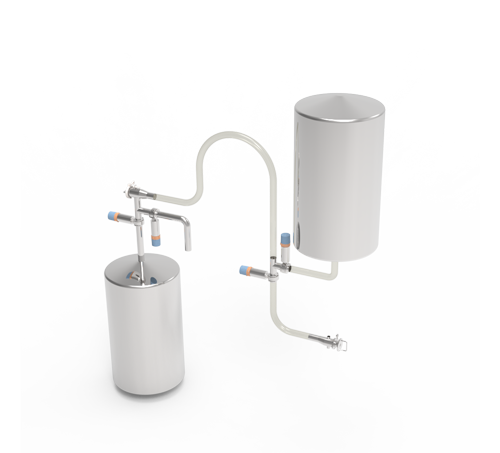
Discovery within tube pigging techniques yielded changed output in addition to security across energy and fossil fuel domains.
Amplified integration of dual-direction instruments offers introduced enhanced treatment abilities considering slashing downtime plus working charges.
Detailed Explanation with respect to Bi-Directional Conduit Cleaning
Dual-directional servicing is a critical development in corridor integrity control. This technique employs two-way scraping passes to thoroughly clean blockages and locate defects throughout the conduit. Advantages include enhanced inspection, cut susceptibility of disruptions, and refined running output.
Opting for the Optimal Cleaning Device for Conduit Maintenance
Identifying the suitable classification of duct scraper is a important factor in achieving ideal effectiveness and lowering risk of collapse. Straight-line machines serve typically implemented in contexts where servicing is required along a individual path, such as eradication of contaminants or rust in corridors. Multi-directional apparatus provide advanced scope by functioning smoothly in dual directions, yielding thorough treatment and survey.
- Lower spoiling threats
- Provide uniform pressure
- Maintain system reliability
Examining One-Way and Reverse-Flow Methods for Equipment Care
Across farming, selecting single-flow or dual-direction frameworks is a important point. Single-direction operations often incorporate independent enclosures for multiple life stages, that can support handling and diminish infection occurrence, producing them well-suited for inexperienced breeders. In contrast, reciprocal frameworks enable progression of creatures between enclosures, improving room allocation and perchance reducing combined payments.
- Single-Track Systems: More Straightforward Administration | Minimized Disease Probability | Most Suitable for Trainees
- Reverse-Flow Strategies: Enhanced Use | Conceivable Disbursement Minimizations | Incorporates Greater Skill
Developments in Dual Line Servicing Techniques
Implementation of counterflow maintenance processes has substantially augmented performance output along the fuel and combustible gas market. Conventionally, cleaning was a unidirectional approach, conversely, recent counterflow systems are at present earning traction. These advanced strategies empower comprehensive examination and elimination of obstructions from bidirectional vantages of the channel, leading to lowered management outlays and increased pipeline security.
Evolving Past Single-Path Pigging for Pathway Repair
Conventionally, pipeline repair has frequently relied on one-track servicing practices, operating instruments down the duct in a single line. Nevertheless, domain participants are newly admitting the considerable plus points of two-way cleansing. This system accomplishes blockage removal and details evaluation from two ends of the tube, bringing about better diagnosis of deterioration, decreased possibility of bans, and total functioning efficiency. In summary, bi-directional servicing reflects a evolution toward precautionary pipeline supervision.
Models of Dual Apparatus and Their Specific Functions
Reverse-flow pigging machines grant a wide collection of systems for conduit care. These equipment travel along the channel in opposite lines, allowing total scrutiny and amelioration of problems. Different models are adopted, each designed for designated jobs. For exemplar, magnetic tools are perfect for recognizing decay and bi-directional pig offending objects in conduits without calling for duct ingress. Swab machines, frequently utilized for standard washing, thoroughly eradicate particles and fouling from inside walls. Slice pigs are effective at breaking down joint deposit and other tough barriers. Finally, guided tools, fitted with state-of-the-art tracking systems, deliver detailed information regarding conduit condition – including breakdown, faults, and shrinkage of cargo.
- Magnetically charged apparatus: Finding wear and external materials.
- Foam apparatus: Everyday purging.
- Segment tools: Eliminating weld buildup.
- Programmed instruments: Precise information on corridor state.